
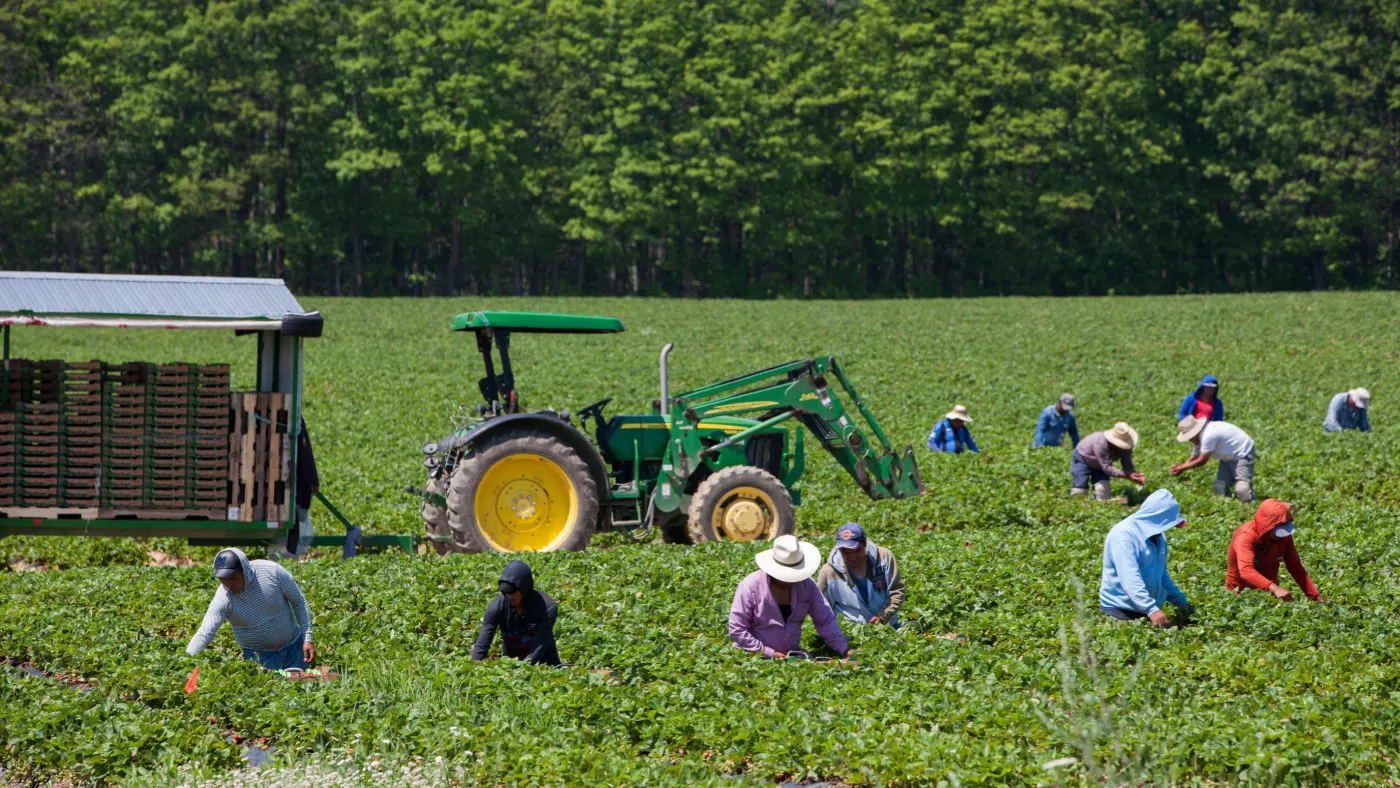
Earlier this fall, the U.S. Department of Labor proposed significant changes to the federal H-2A policy. While details still need to be determined, Austin McClister with the Oregon Farm Bureau says these changes are good news for the state’s Ag industry.
McClister says the Oregon farming sector has been struggling for quite some time.
“We say 69 percent of farms are operating in net cash loss. What this does is it decreases your labor costs by upwards of 20 percent, which is what we’re looking at for that H-2A program. So, we have that AWER, the adverse effect wage rate, sitting at like $19.82 an hour. This is going to drop that down. It’ll never be lower than the state minimum wage. But it’s going to drop it down to a point where, for some counties, you’re going to see $15.25 an hour for that H-2A wage rate.”
The Labor Department’s proposal also looks at dividing jobs by skill levels, which McClister said will benefit the farming industry as well.
He said the H-2A program has become so expensive over recent years that many producers don’t use the program unless they have to.
“You have to provide housing, you have to provide transportation. You know, when you do the math on what that looks like, and you say, like, housing is 30 percent of your income and transportation is another ten percent, if you add that on top of this wage rate, you say, like, you know, some farmworkers are making upwards of $27 an hour. That’s what the farmers are paying them to use this program. So, I don’t know if it increases the use of the H-2A program because the program itself is so expensive.”
So, if this lower rate makes the H-2A program more palatable for Oregon farmers, will that hurt local workers trying to get a job?.
“This is not taking the jobs of domestic farmworkers because a farmer has to hire a domestic worker over an H2A worker, and that’s called the drive up. So if somebody drives up to an H2A job and wants that job, that farmer has to hire that person.”
McClister stressed that these changes will fix a problem that has existed for a long time, pushing labor rates extremely high.