
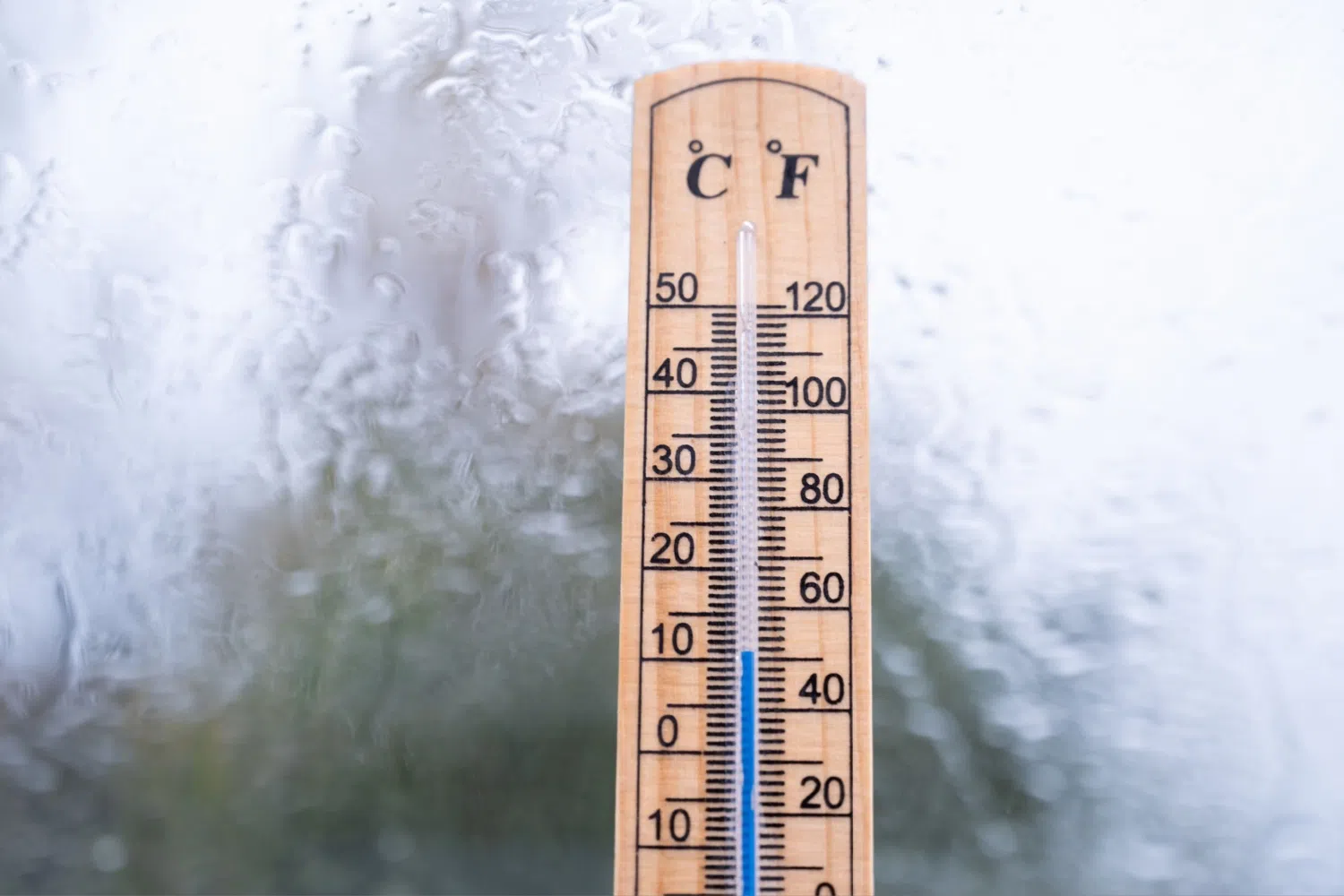
Well, after the last few weeks of dealing with rain, sleet, snow and wintry mixes — all the winter precipitation — this weekend, not so much. And this past week has been very calm in the temperature department. In fact, reaching as high as the 70s in several parts of the Carolinas. But is this here to stay? We got state system climatologist Corey Davis here. Corey, talk about the fact that we had no — not only do we not have any snow — we didn’t have any rain as well here in the Carolinas.
“Yeah, you said it, Kyle. Really good news and bad news. And I’ll say good news for folks who have been sick of seeing that snow sitting around for the last couple of weeks now. I know I could barely get out of the driveway because there was so much snow and ice at the bottom, and finally, that’s melted now. So, it is a relief to see some of that snow go away. But the flip side is, you’re right, there was very little rain across the Carolinas over this past week as well. Most of the Piedmont of North Carolina and the central part of South Carolina saw basically no measurable precipitation over the past seven days. We saw a little bit more out in the mountains of North Carolina, but again, still a drier-than-normal week, and this is one of many drier-than-normal weeks we have stacked up so far this winter. The end result of that is that the drought is getting worse. We are seeing even more of North and South Carolina in that severe drought category — that is the D2 level out of four drought categories. And this week, we now have extreme drought, which is the D3 level on the map, in parts of upstate South Carolina — places like Greenville and Spartanburg counties — and also in the southern Piedmont of North Carolina, areas just to the east of Charlotte, like Cabarrus and Union counties. I’ll note this is the first time we have had extreme drought in North Carolina during the winter months since December 2023, so this is an uncommon event. It’s not something we see, especially at this time of the year, but it’s just a sign of how dry things have gotten.”
Well, you’re talking about several areas starting to see extreme drought. What does that mean, and what kind of impacts will that have if this extreme drought continues to get worse and further into the planting season?
“Yeah, the simple explanation is that extreme drought means that we have been dry for a while without seeing any improvements, without seeing the sort of rain or snow that we would expect during these times of the year. Again, it’s uncommon for this to emerge during the winter months, but it can happen. And when we think about this current drought, we’re really at the six-month anniversary now. We started getting into this dry pattern in the middle of August. We saw that drought really beginning to emerge later in the summer, early in the fall, and just with that overall lack of precipitation this winter, we’ve seen it getting worse, and we haven’t seen the recharge that we’ve expected. So, in terms of impacts right now, it’s often tough to find impacts during the wintertime, but we are seeing some out there. We’re seeing those stream levels that are still running pretty low, even after that snow has melted. We really didn’t see the boost in moisture levels that we had hoped for, considering the amount of snow that was on the ground over the last couple of weeks.
“And then looking ahead, now that some counties are in that extreme drought level, we may start to at least see water conservation measures encouraged. Now this is not a sign that we are running out of water anytime soon, but it is a way for those local towns and water systems to tell folks, ‘Hey, at least be more aware of where your water is coming from, how much water you’re using.’ What I always like to tell people is that if you can take a little bit shorter shower, if you can wait until the dishwasher is full to run a load, that’s always going to save you on your monthly water bill, and in this case, it’ll also help us stretch those supplies a little bit longer.
“And you’re right, Kyle, I think the other big consideration is for the farmers out there. If we stay in this drought going into the spring — and at this point, I think there’s a pretty good chance we’ll at least have some drought on the map by the time those crops go into the ground — that may make some of those farmers second-guess when they want to start planting. Will they have enough soil moisture for some of those crops to germinate? Will the precipitation stay dry through the spring? Will they get the rain that they need? I am hopeful that once we get into the spring, we’ll start to see a little bit more regular rainfall. But again, right now, things are looking not so great on the drought front with that extreme drought on the map this week.”
Some people may be in towns where they rely on city water, and you might be in conservation mode. What about those living on the outskirts of towns, and maybe they’re on well water? How will this extreme drought affect them? Would they have to go through similar conservation efforts that people using city water would?
“Yeah, groundwater is something that we track in North Carolina as part of our weekly drought assessment, and there’s really a mixed picture right now. Mainly across the central part of the state, most of those groundwater wells are still in pretty good shape. Those tend to be deeper wells, so they’re pulling from those aquifers that don’t drain as quickly or as easily. But in parts of both western and eastern North Carolina, we are seeing some of those groundwater levels getting a little bit lower now, at least for this time of the year. And again, that has been one symptom of this current drought. We just have not seen that recharge that we’ve been expecting. So, in those areas, they may feel the squeeze a little bit sooner. Again, I don’t think we’re in any danger of running out of water, but certainly those places that have shallower aquifers or groundwater stores may start to notice they’re getting a little bit lower before the rest of us do.”
Now, we are looking at a potential rain event coming up this weekend, and on the back end of that, it looks like 60- to 70-degree temperatures will be more commonplace. What do we have going on with that?
“Yeah, you know, we saw a preview of that earlier this week. We saw a 70-degree afternoon on Tuesday in Raleigh. The incredible thing about that event is that it wasn’t just in the 70s in the eastern part of North Carolina. Even Asheville made it up into the low 70s that day. So that was widespread warmth coming off the back of that very cold few weeks. In fact, Raleigh had gone 29 days in a row without cracking the 60-degree mark. Now it’s done that a couple of times in just a week.
“But looking ahead to the forecast, we do at least have a couple more 60-degree days in store. This weekend, it looks like both Saturday and Sunday will be on the warmer side, but very different in terms of what’s in the sky. Saturday should be mostly sunny, and then by Sunday, we expect the moisture to start moving in from low pressure to our south that will bring better rain chances, especially later in the day Sunday and then going into Monday. In terms of precipitation totals, I expect most of the Carolinas could see between three-quarters of an inch and maybe an inch and a half of rain. We will certainly hope to end up on the higher side of those amounts, and that would be a wetter-than-normal week for this time of the year.
“And then after that, you’re right, Kyle, another warmup on the way. It looks like mid-60s by Tuesday, maybe near 70 again by Wednesday. So, looking at this forecast and also some of the other long-range forecasts, it is starting to look more and more like winter is in our rearview mirror. We are seeing these spring like temperatures now in February and certainly don’t see any more chances of snow on the horizon. And again, after we just watched all that snow melt, I don’t think too many people are going to complain about that.”
One more question. You’re talking about this rain event — three-quarters of an inch to an inch and a half. Would that have any impact on any of these areas that are currently in extreme drought?
“You know, I would say if we end up on the higher end — maybe an inch to an inch and a half — then we could potentially see some improvements on the map next week. We actually closely looked at parts of eastern North Carolina this week. These are some of the areas that had the heavier snow totals, especially from Goldsboro down to the central coastline. They have actually seen a boost in their soil moisture levels as some of that snow has melted. So, I think if we can get another decent rain on top of that snowmelt, then that could finally bring some improvements, at least across one corner of the state. But I think the fact remains: We are still in a widespread moderate to severe drought in most areas, and it will take more than just one event to really chip away at that drought.”