
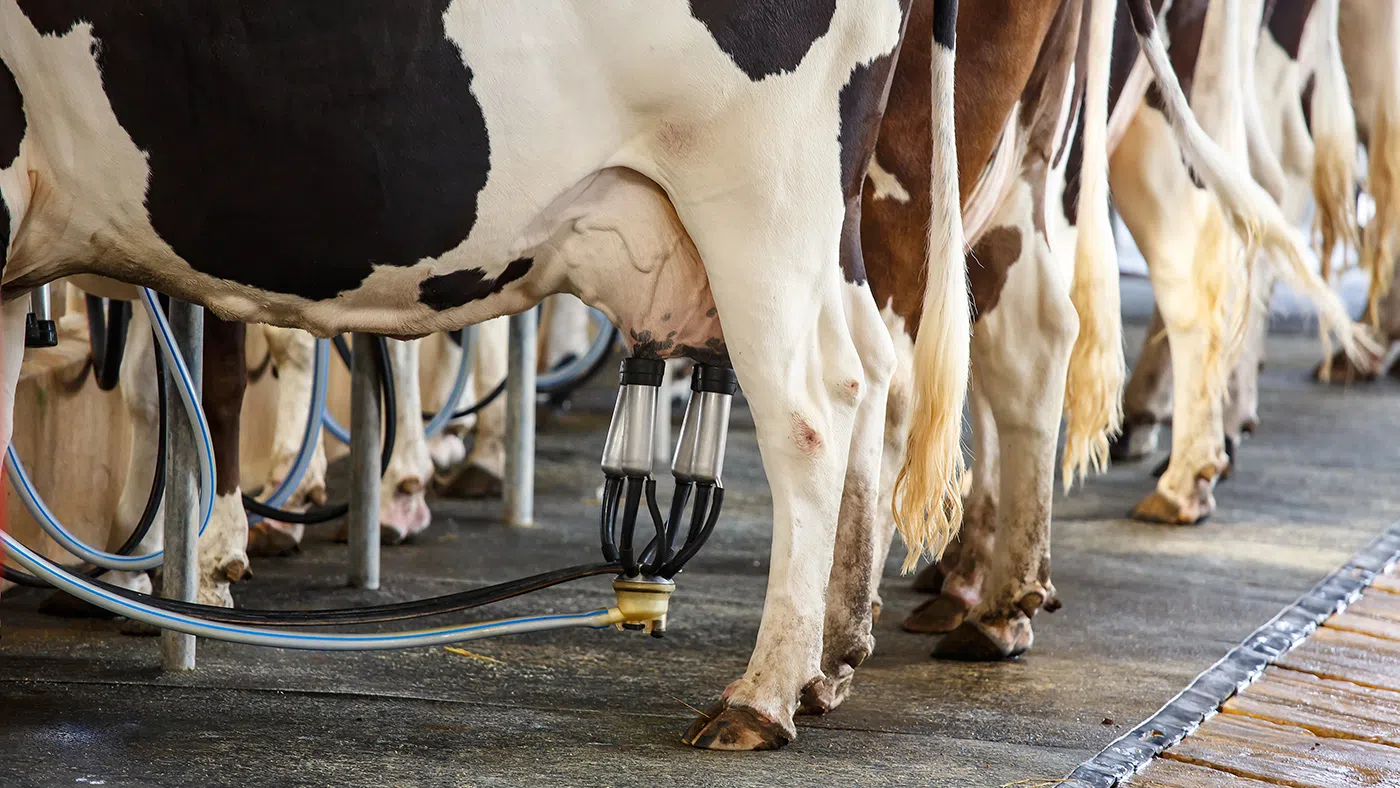
There is so much that goes into keeping dairy cattle healthy. Daniela Roland, a dairy educator for Penn State University Extension, said it’s important not to cut corners and skip the post dip she recommends after milking.
“Post-dipping is equally as important, too. I’d like to remind farmers that the teat end can stay open for up to 30 minutes after the cow is milked. So, if she goes and returns to the barn and lays down, and that teat end is open, do you want a good post dip to be assigned to all four teat ends thoroughly and make sure it has, depending on the time of year, a good barrier in that post dip so that if the cow does go lay down, she’s not going to be getting any pathogen, like from bedding, up into her teat end.”
She talked about machinery do’s and don’ts when it comes to keeping somatic cell and Preliminary Incubation counts in check.
“For the milking equipment, some things to consider are just remembering to replace inflation. And some farmers, I’ve noticed, are pushing more to the silicone inflation from the rubber inflations, and those can last longer, so that can be worth the investment there, but still making sure that those are maintained and replaced when needed. And then, if farmers are using the rubber inflation, definitely replacing them, if any cracks or worn-out rubber are being noticed, is important. Just checking the different systems within your cleaning and milking system, making sure the air system’s working right, and making sure you have the proper hot water temperature for the cleaning cycle is also important. Servicing equipment, whether it’s annually or if you need to do that more often, is also a good investment, so make sure you’re on a routine schedule for that.”
Roland talked about the ranges she wants to see the PI count stay within and when the alarm bells should ring.
“On the PI side, a lot of milk processors like to have PI counts be under 10,000 Coliforming Units, or CSUs per milliliter, and a lot of farms strive to have that and an excellent milk quality. Or a farm with excellent milk quality can have even low PIs in the 1,000 range, which is great to see. If those numbers start to creep up above 20,000, you might be looking at some potential issues. And definitely anything over 50,000 CFUs per milliliter on the PI CF side would indicate an issue within the system.”
And on the Somatic Cell Count?.
“So, on the Somatic Cell Count side, a good threshold I like to remind farmers is that every farmer can have a different goal with their Somatic Cell count, and some milk processors or co-ops pay a premium for lower Somatic Cell counts, but 200,000 is a good number to aim for, to have your bulk tanks below 200,000. When that number creeps up above that, that can indicate you might have some subclinical Mastitis cases within your herd, and you’d want to dig deeper, whether it’s individual cow culturing to see what’s going on there.”