
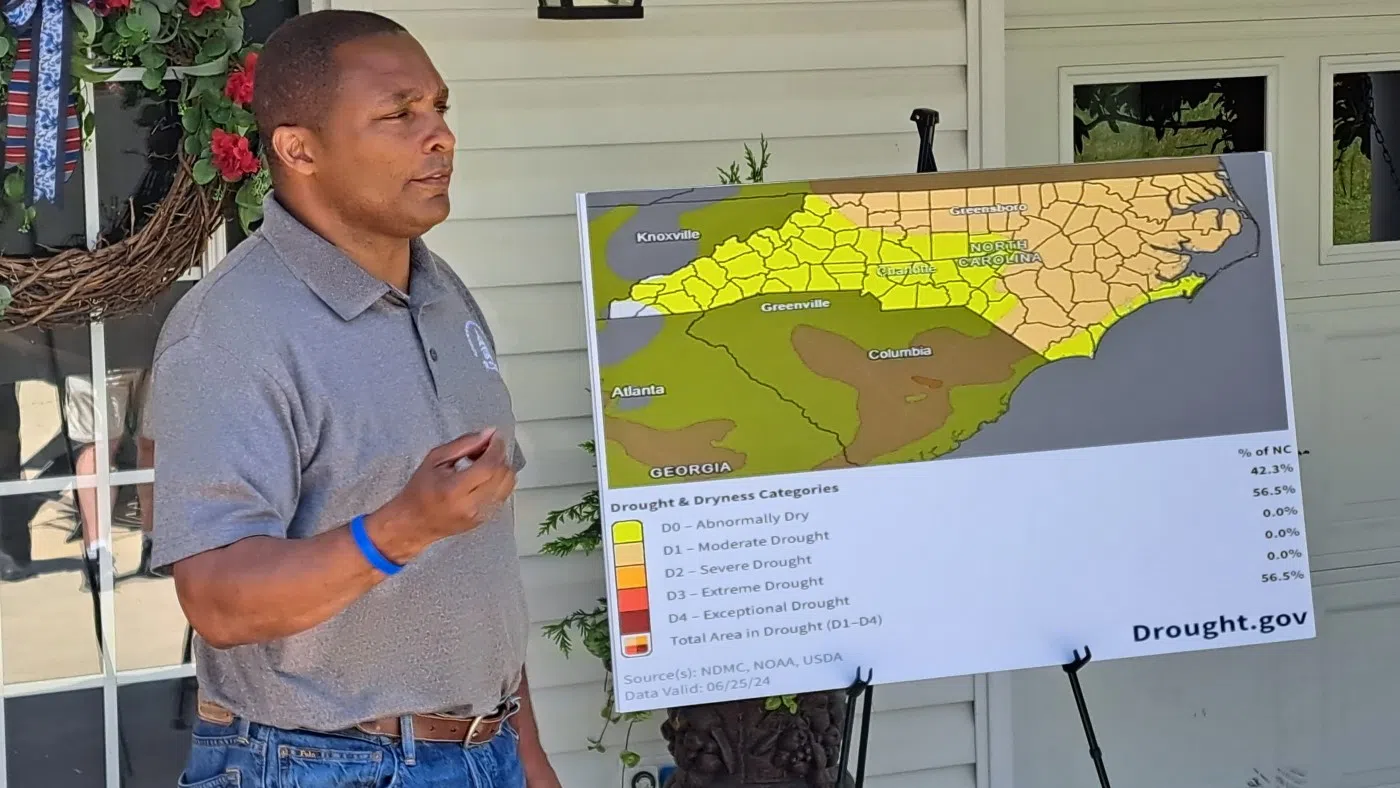
Increased drought conditions across much of the U.S., are leading to lower surface water levels for spring and summer grazing. North Dakota State University Extension Veterinarian Dr. Justin “Jake” Galbreath says as water levels fall, sulfate levels rise, which can lead to health concerns for cattle.
“One of the biggest concerns is, you know, when we have cattle out on pasture, they’re in pastures where, you know, most of their water source is going to be out of stock ponds or dugouts. If we see those water sources start to dry up more, we see that concentration of the solute in there, and if we get into what we call total dissolved solids, just on their own, if those levels become too high, we can start to see issues with, you know, not only water refusal, or might have cows and calves drinking a little bit less, but then also, if we are getting really high levels of those total dissolved solids, it can have some GI effects, and of course, those are going to lead to economic losses.”
Galbreath explains that during the summer months, cows may occasionally go a day or two without water because of issues like a failed stock tank pump. If producers don’t closely monitor the cattle’s water intake once the supply is restored, the animals can consume too much too quickly, which may lead to salt toxicity.
“These cattle, they get dehydrated, and then the producer then notices, ‘Oh, shoot, the water tank ran dry,’ and they start back up again. If those cattle are allowed to just drink as much as they want, we can see them get what’s called salt toxicity, which happens when they get dehydrated. The sodium levels, you know, in the brain are going to be elevated, but when they start drinking that water again, the mechanism by which the body will remove that sodium from the brain and try to balance out those equations again, it’s really slow. And so what happens is we get a lot of water that rushes, you know, right into the brain, causes brain swelling, and that can really rapidly cause those seizures, coma and death.”
The lack of high-quality water for livestock can lead to detrimental losses for an operation.
“It could be easy to see, you know, productivity losses of maybe upwards of like a quarter-pound of average daily gain. So that’s going to impact things, and so if we’ve got, you know, cows out on pasture, we’re expecting them to, you know, cycle in and get pregnant. If they’re in a stress situation because of the water sources, they might not be, you know, we could see conception rates, you know, potentially take a hit. You know, every calf is worth a lot of money, and so we don’t want to even see a 1% or 2% decrease in conception rates.”