
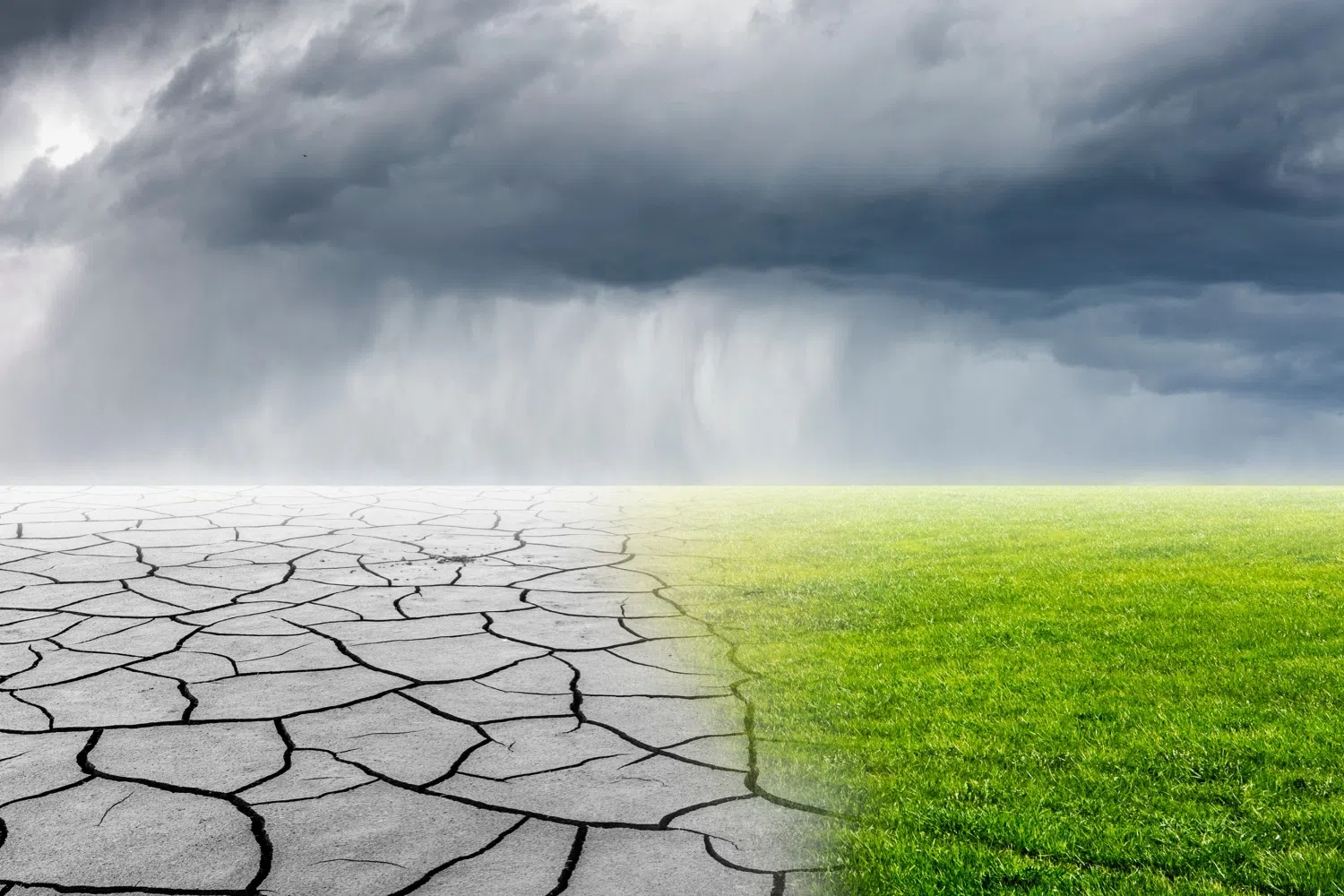
So, we have had some rain over the last couple weeks, but what has that done to the drought map? Have we seen any improvements? Well, from what I understand, we have seen some slight improvements. We’ve got State Assistant Climatologist Corey Davis here.
Corey, talk to us about the drought map. What did that rain over the last week and a half do to improve some areas on the drought map?
“Yeah, Kyle, finally some positive changes to talk about on the drought monitor this week. You know, last week at this time, we were coming off that rainy Memorial Day weekend, but we still hadn’t seen that many changes yet. And one reason is that we were waiting to see the impact that that moisture would have once it finally soaked into the ground. Once we started to see those lingering showers taper off through the middle of last week, the result on this week’s map, again, are some really nice improvements.
“We especially see those down across South Carolina. Upstate South Carolina had been in extreme drought only a few weeks ago. Some of these areas are now back to the moderate drought, or D1, level. That includes places like Columbia, coming up toward Rock Hill near the North Carolina border and getting into the Charlotte area. And then in western North Carolina, we’ve seen places like Asheville that have had some downright heavy rain over the last couple weeks, more than five inches in some spots. They have also seen improvements to that moderate drought level.
“So again, those are the areas where we’ve seen the best rainfall over these last couple weeks. But even across the rest of the state, looking along the coastline in North Carolina and then in parts of the southern Piedmont and Sandhills, we have also seen some of those extreme drought conditions begin to fade, going back to that severe drought level.
“So, I think the main takeaway is that we are still in drought across the Carolinas. In a lot of areas, it is still fairly severe, but it is certainly a better position to be in than we were last month at this time when it seemed like there was no rain in sight.”
Now, you did talk about some of the areas like Asheville seeing at least five inches of rain. Are there some areas in the state that are still trying to get at least an inch or two of rain to help improve themselves on the drought map?
“Yeah, when we look at the rainfall totals over these last couple weeks, there is a real north-to-south divide. Generally, areas farther south and also farther west, like in the mountains, have seen the better totals, more than two inches across those areas. But as we get across the northern tier of North Carolina, especially across the northern Piedmont, we have had very little rain over the last week. And Raleigh finished the month of May with only about an inch and a half in total.
“So, that is our main dry spot. That’s still where we’re seeing those extreme drought conditions on the map. And the unfortunate thing about this placement of these dry areas is that these are the upstream parts of the Neuse and Cape Fear basins. That’s where we’d like to be catching a lot more rain to help refill Falls Lake and Jordan Lake, some of our other major reservoirs. But again, we have just seen very little precipitation there over the last couple of weeks. So, that’s why we do still see these extreme drought conditions.
“And with a fairly hot and dry forecast over the next week, it would not surprise me to see exceptional drought start to reemerge in those parts of the northern Piedmont of North Carolina. So again, better news for South Carolina right now. North Carolina is kind of a mixed bag when it comes to that rainfall.”
Have we got any new updates and impacts from the farmers as to how this rain has helped impact their planting seasons?
“Yeah, as you might imagine, the farmers are pretty happy right now because they have had some really good soaking rain over those last couple of weeks. You know, there’s an old saying: Things come to those who wait. And when I hear that right now, I think about the soybean growers across eastern North and South Carolina.
“Soybeans often go in the ground a little bit later than some other crops, so I think it was fine for those farmers to wait a little bit before they planted, but they were getting to crunch time. If they don’t get those soybeans in the ground by the end of May or early June, then they risk not having enough time in the growing season for them to fully mature.
“But what we’ve seen with that latest round of rainfall over Memorial Day and then last week has given just enough soil moisture for those soybeans to get started. At this point, we’re looking at more than 80% of soybeans planted already across North Carolina. And the soybeans are in really good shape right now. We’re seeing 50% in good condition and 15% in excellent condition based on this week’s report from USDA.
“So again, I think the soybean growers in particular will be really happy with the rain. You know, some of the other crops that we’ve talked about in recent weeks, especially the pastures, the hay fields and the winter wheat, they’re still struggling a little bit. But that’s not so much because of the recent rain. That’s because of that lack of rain over the winter and then coming into the spring.”
Before we get a look at the forecast, Monday, June 1, was the official start of hurricane season — and not the ones going on at the Lenovo Center right now. Do we have any updates? Anything starting to form out in the tropics?
“Well, in the Atlantic, things are still quiet right now. You know, that same pattern we’ve talked about with high wind shear across the basin is still in place right now. But when we look out over the Pacific side, we do have the first named storm of the season there. Tropical Storm Amanda is about halfway between Mexico and Hawaii, so no threat to land right now. But this is a reminder, number one, that we are getting into hurricane season and, number two, of how warm the water is, especially out across the Pacific.
“We know we’re watching that building El Niño, which is associated with warm water, and one of the side effects of that in the Pacific basin is more storms forming. Now, as we talked about a couple weeks ago, it tends to have the opposite effect in the Atlantic. Once that El Niño kicks in later in the summer or this fall, we expect stronger upper-level winds and more wind shear that should eventually hold those storm counts down. But again, right now we do have the first named storm in either basin, and we’re watching it move across the Pacific.”
Well, you kind of teased it a little bit. It looks like it’s going to be a hot weekend. Take a look at the forecast for us.
“I think it’s worth noting that we had a very seasonable May overall. There were a few hot days in there. We hit the 90s a couple times, but for the most part it was pretty typical for that point in the spring. Well, now we’ve flipped the calendar over into June, and it will definitely feel like summer over this next week.
“We’ve been watching those temperatures rise over the last couple days. We were in the mid-80s yesterday and the upper 80s today. We should crack the 90-degree mark across most of the Carolinas, and then the hottest temperatures are still on the way this weekend. It’ll be in the mid-90s by Saturday, maybe mid- to upper 90s on Sunday, probably the hottest day of the year so far in most areas.
“And by that point, Sunday afternoon and Sunday night, we will be begging for some rain to cool us down, and it looks like that’s exactly what we’ll get. There’s a weak cold front that’ll start pushing in on Sunday night and Monday. We should see some scattered showers and thunderstorms along that front, and it’ll also knock our temperatures back a handful of degrees.
“It looks like Monday will probably be upper 80s to low 90s. Through the middle of next week, same story, maybe mid- to upper 80s. So, I think that’ll be a nice but small cooldown. Overall, though, we are in June now. We are in climatological summer. This type of pattern is what we can expect at least over the next few weeks to month. It will probably be hot. It will be humid. But we can at least expect those roughly daily chances of showers and thunderstorms to cool us off.”